Poin of View Keynote Template: A Practical Guide for Professional Presentation Workflows
Presentations remain one of the most reliable ways to communicate ideas, pitch products, train teams, or share research. But building a polished deck from scratch every time is inefficient. The Poin of View Keynote Template addresses this directly by offering a structured yet flexible foundation that fits into real workflows—whether you are preparing a client proposal, a classroom lecture, or an internal quarterly review.
This article walks through what the template offers, how it fits into different stages of a project or creative process, and practical ways to integrate it into your everyday work. The focus is on execution, not decoration.
What Poin of View Keynote Template Brings to Your Workflow
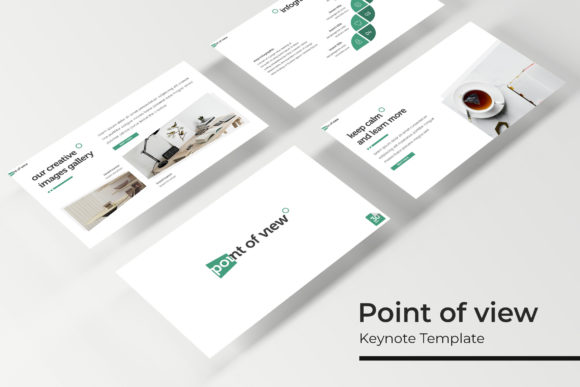
At its core, the Poin of View Keynote Template is a collection of 150 slides organized into five distinct color variations, each with 30 slides. The template is built for Apple Keynote but also includes files that work across presentation platforms. The design relies on master slides, pixel-perfect illustrations, and handcrafted infographic elements, which means you are not starting from a blank canvas—you are building on a consistent visual system.
For anyone who regularly creates presentations, this eliminates the repetitive work of aligning text boxes, choosing fonts, or adjusting color palettes. Instead, you focus on content, structure, and the message you want to deliver. The template becomes a tool that handles the visual heavy lifting while you handle the strategy.
Slide Inventory and Structure
With 150 total slides spread across five color themes, the template covers a wide range of use cases. Each 30-slide set includes:
- Section break slides for transitions between topics
- Gallery and portfolio slides to showcase work or products
- Infographic layouts for data visualization
- Content slides with resizable graphics and editable placeholders
- Drag-and-drop picture placeholders for quick image integration
This structure means you are not limited to a single presentation type. The same template can serve a product launch, a teaching module, a pitch deck, or a portfolio review—just by selecting the color variation that fits your brand or project tone.
Where Poin of View Fits in a Broader Process
A template is most useful when it integrates smoothly into the stages of a project rather than forcing you to adapt your process to it. The Poin of View template works well before, during, and after a project, depending on how you choose to use it.
Before a Project: Planning and Preparation
When you are in the early stages of a project—whether it is a marketing campaign, a product launch, or a training session—you need to outline your key points and gather your assets. The template gives you a visual framework that helps you see how your content will lay out before you write a single slide. You can open the template, review the available slide types, and start mapping your content to the appropriate layouts.
For example, if you know you need to present market data, you can immediately locate the infographic slides. If you need to introduce team members or case studies, the portfolio and gallery slides are ready. This upfront structure saves hours of trial-and-error formatting later.
Additionally, the five premade color variations allow you to choose a direction before you begin. This is useful when aligning with brand guidelines or when you want a specific mood—professional blues, warm earth tones, or high-contrast modern palettes. The decision is made early, which keeps the entire presentation coherent.
During a Project: Building and Iterating
As the project progresses, the template supports quick iteration. Because the graphics are resizable and editable, and because the picture placeholders work by simple drag and drop, you can swap images, adjust charts, and refine text without breaking the design. This is particularly valuable when you are receiving feedback from stakeholders or collaborating with a team.
Master slides ensure that any global changes—like updating a font or adjusting a color—apply consistently across all slides. If your marketing lead decides mid-project that the brand color has shifted slightly, you can update the master slide and every slide in the deck updates automatically. This level of efficiency is what separates a well-designed template from a static set of slides.
The handcrafted infographics are another asset during the build phase. Instead of creating charts and diagrams in separate tools and then importing them as images, you can edit the infographic elements directly within the presentation software. This keeps your workflow contained and reduces the back-and-forth between applications.
After a Project: Distribution and Archiving
Once the presentation is delivered, the template also helps with post-project tasks. Because the files are organized and labeled clearly, you can archive the final deck and reuse the template for future projects. The five PPTX files (one for each color variation) can be stored as master files that you return to again and again.
If you deliver presentations regularly—whether weekly, monthly, or quarterly—having a consistent template reduces cognitive load. You no longer need to remember which font size you used last time or where you saved that custom color hex code. Everything lives inside the template and its accompanying readme file, which includes font details and free download links.
Practical Workflow Examples
Below are three real-world scenarios that show how different users might integrate the Poin of View template into their routines.
Freelance Designer Building a Portfolio Deck
A freelance graphic designer needs to prepare a portfolio presentation for a potential client. They open the template, choose the color variation that best reflects their personal brand, and start populating the gallery and portfolio slides with their best work. The picture placeholders let them drag images directly into the slides without adjusting dimensions. The section break slides create natural pauses between project categories—logos, web designs, print work. The entire deck comes together in under two hours, and the consistent layout ensures the client sees a polished, professional presentation.
Marketing Team Preparing a Campaign Pitch
A marketing team is pitching a new campaign to a client. Three team members collaborate on different sections: one handles the research data, another writes the campaign narrative, and a third gathers visuals. Because the template uses master slides and editable graphics, each person can work on their section without worrying about design consistency. The infographic slides make it easy to present survey results and audience demographics without exporting charts from Excel. The team finalizes the deck, runs through it in a rehearsal, and delivers the pitch—all within the same template structure.
Educator Building a Course Module
An instructor is developing a semester-long course. They use the template to create each module’s lecture slides. The section break slides mark each new topic, the content slides hold explanations, and the gallery slides showcase student examples or case studies. Because the template includes multiple color variations, the instructor can assign a different color to each module, helping students visually distinguish between units. The resizable graphics allow the instructor to embed diagrams and illustrations directly. At the end of the semester, the template is reused for the next cohort with minor updates.
Integration with Other Tools and Resources
The Poin of View template is designed to work within Keynote and PowerPoint environments, but its usefulness extends beyond those applications. The slide layouts can be exported as PDFs, images, or even imported into tools like Canva or Google Slides with some adaptation. The handcrafted infographics and pixel-perfect illustrations are standalone assets that can be extracted and reused in brochures, social media graphics, or reports.
The template also interacts well with asset management systems. If your team uses a shared drive, Dropbox, or a platform like Brandfolder, you can store the PPTX files centrally and maintain version control. The readme file that comes with the template lists the fonts used and includes free download links, which is helpful when onboarding new team members who need to install the correct typefaces.
Compatibility Considerations
One practical point worth noting: the template includes 5 PPTX files, each formatted for widescreen (16:9) displays. This is the standard aspect ratio for most modern projectors, monitors, and video conferencing platforms. If you are working in an environment that still uses 4:3 format, you may need to adjust the slide dimensions in the master settings. The resizable and editable nature of the graphics makes this adjustment straightforward, but it is worth planning for ahead of time.
Quality Control and Long-Term Use
For any template to be valuable over time, it must hold up under repeated use. The Poin of View template is built on master slides, which means the design remains stable even after extensive editing. The pixel-perfect illustrations ensure that elements do not become blurry or distorted when resized. The drag-and-drop picture placeholders are designed to accept images of varying resolutions, though for best results, you should crop your images to the placeholder dimensions before inserting them.
A few practical quality control tips for long-term use:
- Keep a copy of each color variation as a clean master file. Use duplicates for active projects.
- Update the readme file if you change the font selection or add custom graphics.
- Archive completed presentations separately from the template to avoid clutter.
- Periodically review the infographic templates to ensure they still match your current data visualization needs.
Because the template includes 150 slides across five color themes, you are unlikely to exhaust its layouts quickly. Even if you deliver multiple presentations per week, you can rotate through the color variations and reuse slide types as needed.
What Is Not Included (and Why That Matters)
The preview images you see online feature photographs and pictures that are used for illustration purposes only. These are not included in the purchased files. This is standard practice for presentation templates, but it is worth keeping in mind when you plan your own content. You will need to supply your own images, logos, and specific graphics that are relevant to your project.
This actually gives you more control over the final product. Instead of modifying someone else’s stock images, you can use your own photography, screenshots, brand assets, or client materials. The picture placeholders are designed to accommodate exactly this workflow—you drop in your content, and the layout adapts.
Getting Started Without Overthinking
If you are new to using structured presentation templates, the best approach is to open one of the PPTX files and start exploring. Duplicate the file so you have a backup, then begin replacing placeholder text with your own content. Adjust the colors if needed—the five premade options cover most use cases, but you can always tweak them further. Use the section break slides to organize your narrative. Use the infographic slides for any data or comparative information. Use the gallery and portfolio slides for any visual showcase.
Within one session, you will likely have a draft that is structurally complete. The remaining time goes toward refining the message and ensuring consistency across slides. That is the fundamental advantage of working with a template like Poin of View: you spend less time on layout and more time on content, which is where the real value lies.
Final Observations on Process and Efficiency
Templates are not shortcuts—they are frameworks. The Poin of View Keynote Template provides a framework that supports planning, building, delivering, and archiving presentations. It works for solo creators and for teams. It works for one-off pitches and for recurring reporting decks. It works with Keynote and PowerPoint, and its assets can be repurposed across other platforms.
The five color variations, 150 total slides, and handcrafted infographics give you enough range to handle diverse projects without learning a new system each time. The master slide architecture and resizable graphics keep the design stable as you edit. And the practical elements—picture placeholders, section breaks, portfolio layouts—are chosen to match the real needs of people who present as part of their workflow.
Whether you are a marketer, educator, freelancer, or small business owner, the goal is the same: communicate clearly and professionally without wasting time on repetitive formatting. The Poin of View template helps you do exactly that, and with consistent use, it becomes a natural part of how you prepare and present your work.