Puzzie Keynote Template: What to Know Before You Download and Use It
You have a presentation coming up, and you want it to look polished without spending hours designing from scratch. That is exactly why templates like Puzzie Keynote Template exist. With 150 slides, five premade color variations, and handcrafted infographics, it promises a head start. But using a template effectively is not just about dropping in your content. Many people download a powerful tool like this and still end up with a messy, inconsistent, or unprofessional slide deck. The problem is rarely the template itself. It is how people approach it. Understanding the common missteps—and how to avoid them—can save you time, frustration, and a presentation that falls flat.
Why Puzzie Keynote Template Gets Attention
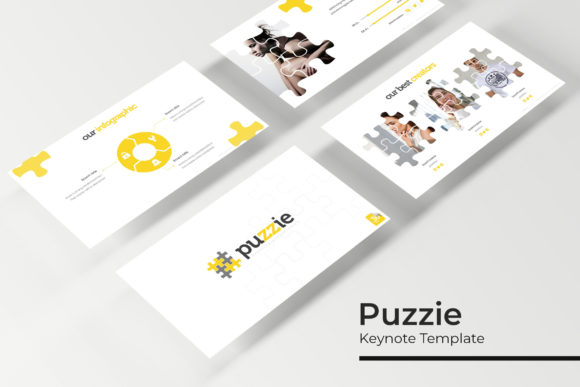
This template is built around variety and flexibility. With 150 total slides spread across five different color schemes, you get 30 slides per template. That means you have enough slides to cover almost any topic without running out of layouts. The inclusion of handcrafted infographics, section break slides, gallery and portfolio slides, and resizable graphics makes it suitable for everything from a business pitch to a creative portfolio. Because it is based on master slides and uses pixel-perfect illustrations, you can drag and drop your images into picture placeholders, and everything stays aligned. The package comes with five PPTX files for widescreen format, a readme file, and a link to download the free fonts used. All of this sounds great—and it is—but only if you use it correctly.
The Most Common Mistakes People Make
Even the best template can trip you up if you ignore key details. Here are the pitfalls I see again and again, along with how to sidestep them.
Mistake 1: Assuming You Can Use It Right Out of the Box Without Customizing
A template is a starting point, not a finished product. Many people download Puzzie Keynote Template, open it, and think the job is done. They replace a few words and present. The result? A deck that looks generic and mismatched to their brand, message, or audience. The template’s five premade colors are appealing, but none may match your company’s palette or the tone of your talk. The layout of a section break slide might not align with the story you want to tell. When you skip customization, you lose the opportunity to make the presentation yours.
Better approach: Spend time adjusting the colors, fonts, and graphics to fit your specific needs. The template includes five color variations, so pick the one closest to your brand and then tweak it further. Use the master slides to change background colors, heading styles, or accent elements. The picture placeholders are drag-and-drop friendly—use them to insert your own high-quality images, not the stock ones from the preview. The handcrafted infographics are excellent for data, but make sure the charts and icons actually match your data story. Don’t be afraid to delete slides you don’t need. The 150-slide library is meant to give you options; you are not required to use every one.
Mistake 2: Ignoring the Limitations of the Preview Images
The product description explicitly states: “All photographs or pictures used in the preview are not included, they are intended for illustration purpose only.” This is a critical detail that many people overlook. They see beautiful, professional photos in the demo and assume those will come with the template. Then they open the file and find empty placeholders, leading to confusion or disappointment. The same applies to the font: the template uses a specific free font, and the link is provided, but if you do not install it, your slides will fall back to a default font that may ruin the design.
Better approach: Before you start building your deck, download and install the recommended free fonts. Gather your own images—your own product photos, team portraits, or high-quality stock images that fit your topic. Use the picture placeholders to quickly drop them in. If you do not have images yet, plan a shoot or use free stock libraries (with appropriate licenses). The template’s pixel-perfect graphics will look best when paired with images that have similar resolution and composition. Also, note that the preview screenshots often show stylized layouts; you may need to adjust text amounts or graphic sizes to suit your actual content.
Mistake 3: Not Checking Compatibility and Software Requirements
Puzzie Keynote Template is designed for Keynote, Apple’s presentation software. But not everyone uses Keynote, or they may be using an older version. Some users try to open the PPTX files in PowerPoint or Google Slides, only to find misplaced elements, broken fonts, or missing effects. That leads to extra time fixing formatting issues. Even within Keynote, older versions may not support all the master slide features or the exact layout of the template.
Better approach: Verify that you have a compatible version of Keynote before purchasing or downloading. If you need to use PowerPoint, look for a dedicated PowerPoint template instead. If you must convert, understand that you will likely need to rebuild certain elements. Use the provided readme file to check version requirements. The five PPTX files are in widescreen format—ensure your presentation display supports that aspect ratio. Testing one slide first can save you hours of rework later.
Mistake 4: Overloading Slides with Too Many Elements
Because Puzzie Keynote Template offers handcrafted infographics, section breaks, portfolio slides, and more, it is tempting to use everything at once. I have seen decks where every slide is a different layout, some with overly complex infographics, others with too many icons or graphics. The result is visual chaos. The audience gets overwhelmed and misses your key message. The template’s strength is variety, but that variety should serve a clear purpose, not become clutter.
Better approach: Choose a consistent visual system from the template. Pick one or two color variations and stick with them for the entire deck. Use section break slides sparingly—one per major section is enough. For infographics, only include them when you have real data to illustrate, and keep them simple. If you have multiple portfolio slides, choose the gallery layout that best displays your work without overcrowding. Remember that whitespace is your friend. Resizable graphics are helpful, but resist the urge to enlarge everything to fill the slide. Let your content breathe. A clean, focused slide is far more effective than a busy one.
Mistake 5: Neglecting the Importance of Consistent Typography and Alignment
The template comes with a free font download link, but many users either skip installing the font or use a different one that doesn’t quite fit. They also might not notice that some text boxes have different sizes or alignments across slides. This lack of consistency makes the presentation look unprofessional, even if the underlying design is solid. The master slides are designed to give you uniform fonts and spacing, but if you manually change a text box on one slide, you break that consistency.
Better approach: After you install the recommended fonts, use the master slides to set your heading and body text styles. When you are editing individual slides, avoid moving or resizing text placeholders unless absolutely necessary. Use the built-in street-level controls (like line spacing and indentation) rather than manual line breaks. If you need to add a new text box, try to copy an existing one from a slide that already matches the template’s style. This preserves the pixel-perfect look. Also, keep an eye on alignment: use Keynote’s alignment guides to ensure elements line up across slides. A few minutes spent on consistency pays off in a cohesive presentation.
Mistake 6: Assuming All Graphics Are Editable in the Same Way
The template advertises “handcrafted infographic in Powerpoint” and “resizable and editable graphic picture placeholders.” That sounds straightforward, but not all graphics are created equal. Some elements might be grouped as images rather than native shapes, or they might be locked. Users try to recolor an infographic icon and find they cannot because it is a flattened image. Or they try to resize a graphic and it warps because of locked aspect ratios. This leads to frustration and wasted time.
Better approach: Before you rely on a graphic, inspect how it was built. In Keynote, select the element and check if it is grouped. Ungroup it carefully to see if you can edit colors, sizes, or text within. If an infographic is a single image, you may need to recreate it using the native tools, or find an alternative layout. The resizable nature of the template is mostly reliable for picture placeholders and simple shapes, but complex illustrations might be more rigid. Test one graphic first before you build an entire section around it. Also, keep the original template file as a backup; if you break something, you can always revisit the master slide version.
Mistake 7: Overlooking the Section Break and Gallery Slides for Audience Engagement
Many users see section break slides as mere dividers and treat them as afterthoughts. They drop in a title and move on. Similarly, gallery or portfolio slides are often filled with random images just to fill space. This is a missed opportunity. Section breaks can serve as powerful storytelling moments—they signal a shift, build anticipation, or summarize what just came. Portfolio slides can be used to showcase case studies, testimonials, or results, not just pretty pictures.
Better approach: Use section break slides to reinforce your narrative. Add a compelling question, a bold statement, or a memorable image that frames the next section. On gallery slides, curate your images with intention. Choose photos that support your message, and include brief captions or data points if applicable. The portfolio layout is a chance to show proof of your work. If you are a freelancer or small business owner, each gallery image could represent a success story with a short description. This turns an ordinary slide into a persuasive piece of your presentation.
What to Check Before You Hit Download
Before you purchase or use Puzzie Keynote Template, run through this short checklist to avoid headaches later:
- Software compatibility: Are you using Keynote, and is your version up to date? If you need to present on a different platform, consider a template built for that platform.
- Font availability: Download and install the recommended free fonts before you start editing. If you cannot use them, find a close alternative that pairs well.
- Image needs: Do you have your own high-resolution images ready? The template provides placeholders, not stock photos. Plan your visuals ahead.
- Color palette fit: Which of the five premade colors best aligns with your brand or theme? You can further customize them, but starting close saves time.
- Understanding of master slides: Learn how to edit master slides in Keynote. This will let you make global changes to the template without breaking individual slides.
- Slide count relevance: You do not need to use all 150 slides. Identify the 15–30 that actually support your story. Delete the rest.
A Better Way to Work With Puzzie
Start by creating an outline of your presentation. What is your core message? What key points need visual support? Then, open the template and browse the five color variations. Pick one that feels right. Duplicate that file and work in the copy. Go through the slides, keeping only the layouts that serve your outline. Replace placeholder images with your own. Adjust colors slightly if needed—use the master slide to change the accent color or background. Customize the infographics by entering your own data or simplifying a complex chart. Use section break slides at natural pauses in your narrative. For portfolio or gallery slides, handpick images that demonstrate your best work. Finally, review every slide for consistent typography, alignment, and spacing. The pixel-perfect base will shine through if you respect its structure.
When you treat Puzzie Keynote Template as a flexible toolkit rather than a finished product, you get a presentation that looks custom-made. It saves you design time while giving you the professionalism you need—whether you are an entrepreneur pitching to investors, a teacher explaining complex ideas, or a freelancer showcasing a portfolio. Avoid the common mistakes, apply the corrections above, and you will walk away with a slide deck that communicates clearly and leaves a strong impression.