Poin of View Google Slide Template: A Strategic Tool for Clearer Communication and Better Decisions
Every presentation is, at its core, an attempt to change someone's point of view. Whether you are pitching a product, teaching a concept, or aligning a team, the goal is not simply to share information but to shape understanding. Yet too many presentations fail because the visual structure works against the message. Slides become cluttered, inconsistent, or generic. The audience struggles to follow the thread, and the point of view gets lost. This is where the Poin of View Google Slide Template enters as more than just a design asset. It is a structural framework for thinking, planning, and communicating with clarity.
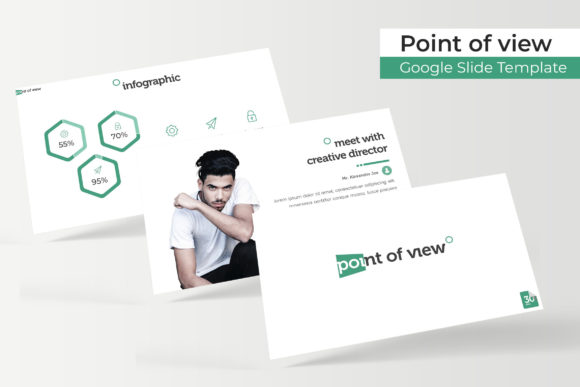
With 150 total slides organized across five premade color variations, each containing 30 slides, this template offers a deliberate foundation for building presentations that feel coherent and intentional. But the real value is not in the count of slides or the palette options. It is in how you use these materials to support your goals, sharpen your arguments, and respect your audience's attention. The following sections explore what this template offers, when and how to use it strategically, and what to consider before you rely on it as your primary presentation tool.
What Makes the Poin of View Google Slide Template Different
On the surface, this is a collection of slides. But a closer look reveals design decisions that matter for anyone who creates presentations regularly. The template includes handcrafted infographics, section break slides, gallery and portfolio layouts, and pixel-perfect illustrations. Everything is built on master slides, which means you can make global changes without editing each slide individually. Graphics are resizable and editable, and picture placeholders allow drag-and-drop image insertion. These features reduce friction. Instead of fighting the tool, you focus on the message.
The availability of five distinct color variations is not just aesthetic. Different contexts call for different tones. A pitch to investors may require darker, more authoritative colors. A workshop with educators may benefit from lighter, warmer tones. Having five premade color sets means you can adapt the same underlying structure to different audiences without rebuilding from scratch. Each variation contains 30 slides, giving you enough room to build a narrative arc without running out of space or repeating layouts.
The template also includes a Readme file with font links and usage notes. This matters more than it seems. Consistent typography is one of the easiest ways to signal quality and care. When fonts are missing or mismatched, the entire presentation feels off. By providing the font download links, the template removes a common point of friction.
Why Thoughtful Use of This Template Supports Better Outcomes
A template is only as good as the thinking behind its use. The Poin of View Google Slide Template is not a shortcut to a great presentation. It is a scaffold that supports better planning, clearer positioning, and more effective communication. Here is how that plays out in practice.
Strategic Clarity and Message Positioning
When you start with a structured template, you are forced to make choices about what to include and what to leave out. The 30-slide structure per color set encourages you to think in segments. You cannot cram everything into one format. You must decide what belongs in the introduction, where the evidence lives, and how you transition between ideas. This constraint is actually an advantage. It pushes you to prioritize your key points and discard the noise. For entrepreneurs and marketers who often have too much to say, this discipline is valuable.
Faster Execution Without Sacrificing Quality
For freelancers, small business owners, and creators, time is a limited resource. Building a presentation from scratch every time is inefficient. Having a library of prebuilt, editable slides means you can assemble a client deck, a webinar presentation, or a product update in hours instead of days. The drag-and-drop picture placeholders and resizable graphics mean you do not need design skills to produce work that looks polished. This speed does not come at the cost of quality, because the underlying design is already tested.
Consistency Across Multiple Presentations
Professionals who present regularly face a challenge: each presentation looks different from the last. This inconsistency undermines brand recognition and professional credibility. By using the same template family with different color variations, you can create a family of presentations that feel connected without being identical. This is useful for educators delivering multiple modules, agencies pitching different clients, or internal teams reporting on different projects.
When to Use This Template Strategically
Not every presentation needs a full 30-slide template. But several scenarios make the Poin of View Google Slide Template a particularly good fit.
- Client pitches and proposals: The gallery and portfolio slides are built for showcasing work. The section breaks help you move from problem to solution to credentials without losing the audience.
- Educational content and workshops: Educators and trainers benefit from the infographic slides, which can simplify complex concepts. The structure helps learners follow a logical progression.
- Internal strategy reviews: For decision-makers presenting to leadership, the clean layouts and consistent color palette signal professionalism. The focus stays on the data and the reasoning.
- Product launches and updates: The portfolio and image placeholder slides let you show products or features in context. The resizable graphics mean you can customize visuals for each launch.
- Personal branding and portfolios: Freelancers and creators can use the template to build a visual portfolio that tells a story about their work. The five color options let you tailor the look for different industries.
The key is to match the template's structure to the narrative you need to deliver. If your presentation requires a clear beginning, middle, and end with distinct sections, this template gives you the bones. If your presentation is a single long argument without breaks, you may need to adapt the section slides to serve as emphasis points rather than hard separations.
How to Approach the Template with Intention
The risk of using any template is that you fill it with content without thinking. Slides become containers for bullet points rather than tools for persuasion. To avoid this, approach the Poin of View Google Slide Template with a clear process.
Start by defining your objective. What do you want the audience to think, feel, or do after the presentation? Write that in one sentence. Then map your key points to the sections in the template. Use the section break slides to mark major shifts in the argument. Use the infographic slides for data or processes that need visual explanation. Use the portfolio slides for evidence of past work or case studies.
Next, choose your color variation based on audience and context. A professional services pitch may work best with the neutral or dark palette. A creative portfolio may benefit from a brighter variation. The color choice should reinforce the emotional tone of your message, not compete with it.
Finally, customize every slide for your content. The picture placeholders are there for your images, not generic stock photos. The editable graphics should be adjusted to reflect your data, not the sample data. The template gives you a starting point. Your content and context make it yours.
What to Consider Before Relying on the Template
No template is a substitute for thinking. If you use the Poin of View Google Slide Template without a clear goal, you risk creating a presentation that looks good but says nothing. The structure can hide weak arguments. The visuals can distract from missing evidence. The polished design can give a false sense of readiness.
Another consideration is audience fatigue. If your audience sees the same template structure repeatedly, it loses impact. This is less of an issue if you use the different color variations to create variety, but it is worth noting. For high-stakes presentations where surprise and novelty matter, you may want to customize the template more heavily or combine it with other design elements.
Also, note that the photographs and images in the preview are not included. This is standard for most templates, but it means you need your own image assets. Plan for this. Low-quality images will undermine the professional look of the template. Invest in good photography or illustration that matches your message.
Practical Planning Tips for Getting the Most Out of the Template
To use this template effectively, treat it as a planning tool first and a design tool second. Here are some practical steps.
- Outline before you open the file. Write your key points, transitions, and call to action. Only then match them to the slide layouts.
- Use the section break slides as checkpoints. Every time you hit a section break, pause and ask whether the audience has followed the argument so far. These slides are not just decorative. They are signals for the audience to reorient.
- Edit the infographics to reflect your data. Handcrafted infographics are only useful if they communicate your numbers or relationships. Adjust colors, labels, and scales to match your information.
- Test the template in your presentation environment. Google Slides renders differently depending on screen size, projector quality, and internet speed. Test the slides on the actual equipment you will use.
- Keep a master version. Once you customize a color variation for a specific presentation, save a copy. Over time, you will build a library of tailored presentations that you can adapt for future needs.
Long-Term Value for Frequent Presenters
For professionals who present regularly, the Poin of View Google Slide Template offers a return on investment that goes beyond a single deck. The five color variations give you five distinct visual identities. Over a year, you could use a different variation for quarterly reviews, client pitches, internal training, conference talks, and portfolio updates. Each presentation looks fresh, but the underlying structure remains familiar to you, which reduces your preparation time.
The master slides and resizable graphics also mean that as your needs evolve, the template evolves with you. You are not locked into a rigid format. You can add new slides, modify existing ones, or combine elements from different color variations. The template is a starting framework, not a final product.
For educators, the template supports curriculum development. A course with five modules could use a different color variation for each module, creating visual differentiation while maintaining a consistent learning experience. Students benefit from the predictability of the layout while staying engaged through the color shifts.
The Bottom Line on Using This Template Strategically
The Poin of View Google Slide Template is a well-constructed tool for anyone who needs to communicate complex ideas with clarity and professionalism. Its 150 slides, five color variations, handcrafted infographics, and editable elements make it versatile enough for entrepreneurs, marketers, educators, freelancers, and decision-makers across many fields. But the tool is only as effective as the strategy behind it.
Use it to plan your message, not just to decorate it. Choose colors that match your audience and context. Customize every slide to serve your narrative. Avoid the temptation to fill empty space with filler content. When used with intention, this template helps you move from a collection of slides to a presentation that actually changes how people think. That is the point of view worth taking.