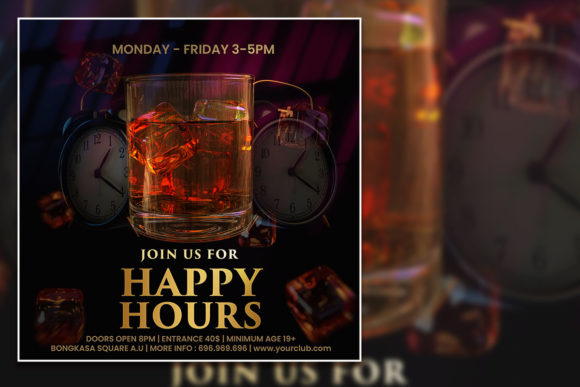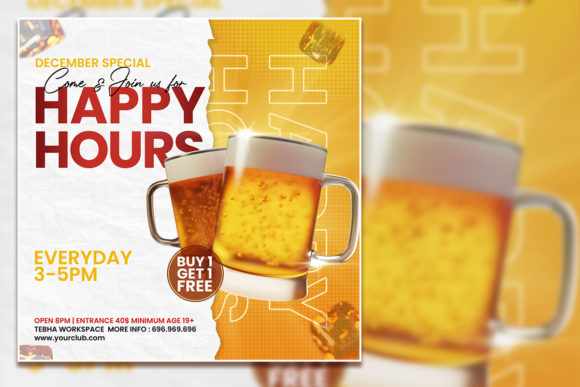
Elevate Your Brand with Modern Happy Hours Social Media Post Templates
In the fast-moving world of social media marketing, consistency and quality are no longer optional—they are baseline expectations. Every brand, from solo entrepreneurs to established agencies, faces the same challenge: how to produce visually compelling content that resonates with audiences, maintains brand identity, and does not consume every waking hour. The answer increasingly lies in smart, customizable design assets. Among the most effective tools emerging in this space are comprehensive template packages, such as the Modern Happy Hours Social Media Post. This article explores what this resource offers, why it has captured the attention of creators and marketers, and how it fits into the larger shifts shaping visual communication today.
What Is the Modern Happy Hours Social Media Post?
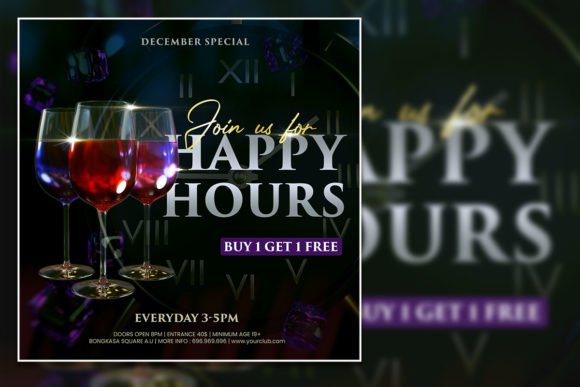
At its core, the Modern Happy Hours Social Media Post is a meticulously crafted design package tailored for social media content. It is not merely a single image but a full-featured, highly adaptable system. The package includes one layered PSD file that is 100% editable and customizable. Designed at 2000 x 2000 pixels with a 300 DPI resolution and an RGB color profile, it meets the technical requirements for both digital platforms and high-quality print applications. The file boasts 100 individually layered elements, offering granular control over every component—from background textures and typography to icons and decorative elements. It also comes with a list of 100 free fonts, so users can replicate the designs without additional licensing costs.
Importantly, the package is described as print-ready, meaning the same file can be used for flyers, posters, or promotional materials. The note clarifies that images and photos are not included in the preview files—this is intentional. Users are expected to insert their own imagery, and the design structure makes this process straightforward. The message is clear: you are getting a professional framework that saves hours of design time, not a finished product that cannot be adapted.
Why Designers and Marketers Are Paying Attention
The rising popularity of modular, editable social media templates is not a fleeting trend. It reflects a deeper shift in how visual content is produced and consumed. Several factors explain why resources like the Modern Happy Hours Social Media Post have become essential tools for professionals.
1. The Demand for Consistent Branding
In an era where a brand may post multiple times per day across several platforms, maintaining a cohesive look is a major challenge. Templates solve this by providing a predefined structure—colors, typography, spacing, and layout—that can be repeated and tweaked. With 100 layers, users can adjust each post to fit a specific campaign while keeping the overall brand identity intact. This is especially valuable for businesses that rely on a team of creators, as it ensures everyone produces content that looks like it belongs to the same family.
2. The Efficiency Imperative
Time is the most precious resource for any creator or marketer. Designing a single social media image from scratch—choosing fonts, aligning layers, checking resolution—can take 30 minutes or more. Multiply that by dozens of posts, and the lost hours become significant. A layered PSD file that is already set to the correct specs (RGB, 300 DPI, 2000x2000 pixels) eliminates the repetitive technical work. The user focuses on the creative decisions: swapping an image, editing a headline, or shifting a color. This efficiency does not sacrifice quality; it simply redirects effort to where it matters most.
3. The Rise of DIY Content Creation
Many small businesses, freelancers, and solopreneurs do not have the budget for a dedicated graphic designer. Yet they cannot afford to look amateurish. Editable templates bridge this gap. They offer a professional starting point that anyone with basic Photoshop skills can modify. The Modern Happy Hours Social Media Post package is designed with this user in mind: full editability means you can change every text element, swap backgrounds, adjust layer visibility, and even combine elements from different designs. The learning curve is shallow, and the output is polished.
4. Adaptability Across Platforms and Use Cases
The specific dimensions of 2000x2000 pixels are square—perfect for Instagram feed posts, Facebook square ads, LinkedIn updates, and Pinterest pins. But with 100 layers and a full editable PSD, the same file can be repurposed. A user might shrink the canvas for a story format, extract a single element for a banner, or use the print-ready structure to produce a small poster for an event. This flexibility extends the value of a single template far beyond a single post.
Broader Trends That Make This Package Relevant
Understanding why the Modern Happy Hours Social Media Post resonates requires looking at the larger context of content creation and digital marketing.
The Shift Toward Visual Micro-Branding
Brands are no longer just logos and taglines. Today, a brand is experienced through a stream of images, stories, and videos. Each post is a micro-brand statement. Templates allow businesses to maintain a consistent visual language even as they produce high volumes of content. The easy customizable and editable nature of this package means that a brand can evolve its look over time without starting from zero. For example, a coffee shop might use the same template structure for a week of posts, changing the featured drink image and copy each day. The result is a series of posts that feel unified yet fresh.
The Hybrid Digital-Print Workflow
While social media is digital-first, many businesses still need print materials for events, in-store promotions, or local marketing. A 300 DPI RGB file bridges both worlds. RGB is standard for screens, but because the resolution is high (300 DPI) and the file is print-ready, the same PSD can be converted to CMYK and printed with minimal adjustment. This dual-purpose capability is increasingly valued as brands seek to streamline their asset libraries. The Modern Happy Hours Social Media Post package explicitly acknowledges this by being both print-ready and optimized for digital use.
The Democratization of Professional Design Tools
Access to professional design resources has never been easier. With platforms offering thousands of templates, free fonts, and affordable stock imagery, the barrier to entry has lowered dramatically. However, this abundance also creates a problem: many templates are rigid, difficult to edit, or locked into specific software. The full editability of a layered PSD file remains the gold standard for professionals who need control. It allows for deep customization—merging layers, applying masks, adjusting blend modes—that simpler tools cannot match. The promise of 100 layered and full editable content signals that this package is built for users who value flexibility over convenience.
Practical Examples of How Creators Use the Template
To understand the real-world value, consider how different professionals might leverage the Modern Happy Hours Social Media Post package.
- A freelance graphic designer uses the template as a base for client projects. Instead of building a campaign from scratch, they load the PSD, apply the client’s brand colors, replace placeholder images with client photography, and adjust the typography to match the brand guide. They can deliver a full set of social media posts in a fraction of the time, increasing their hourly profitability.
- A small bakery uses the template to announce weekly specials. The owner has no design background but follows the included instructions. They swap in photos of their pastries, change the text to “Today’s Special: Chocolate Croissant,” and post. The consistent layout builds recognition—followers begin to associate the style with the brand.
- A marketing agency uses the layered structure to create a series of A/B test variations. By toggling different text layers, background colors, and call-to-action buttons, they produce multiple versions of the same post. This systematic approach to testing is possible only when the design is fully editable and organized.
- A content creator adapts the template for a mini-branded series, such as “Happy Hour Tips.” Each post uses the same layout but features a different tip and image. Over time, the series becomes a recognizable content pillar, driving engagement and shares.
These examples illustrate a common thread: the template does not dictate the content; it enables the creator to focus on messaging and imagery. The heavy lifting—layer organization, color harmony, typography hierarchy—is already done.
Why “Images Not Included” Is a Feature, Not a Limitation
Some users might initially be concerned that the package does not include stock photos. In reality, this is a deliberate design choice that adds to the tool’s utility. Pre-packaged images can become a crutch, leading to generic-looking posts that blend in with the crowd. By requiring you to replace the picture by yours, the template forces authenticity. Your own product shots, event photos, or branded graphics ensure that every post is unique to your business. Moreover, because the template is built for easy image replacement—layered, clearly labeled, and separated from background elements—the process is seamless. The instruction to “not worry, it could not get any easier” is accurate: swap, adjust, and you are done.
Connecting to Larger Developments in Content Production
The emergence of robust template systems like the Modern Happy Hours Social Media Post is part of a broader move toward modular, reusable content architectures. Just as website builders use components and blocks, social media designers are adopting layered templates as standard building blocks. This mirrors trends in software development (component-based UI), email marketing (modular templates), and video editing (preset transitions and lower thirds). The underlying principle is the same: reduce repetitive work, maintain consistency, and allocate creative energy to differentiation.
Moreover, the emphasis on 300 DPI and print-ready formats hints at a convergence between digital and physical media. As brands increasingly participate in pop-ups, local events, and hybrid experiences, the ability to seamlessly move a design from a smartphone feed to a printed sign becomes a strategic asset. This template package recognizes that modern brands exist in both worlds.
Who Benefits Most?
While the template is versatile, it particularly serves professionals who need to produce a steady stream of visual content without relying on a full-time designer. Entrepreneurs, social media managers, e-commerce sellers, event promoters, and community builders will find immediate value. Even experienced designers appreciate having a jumping-off point that eliminates the drudgery of setting up a new document from scratch. The 100 free fonts add considerable value, as font licensing can be expensive and confusing. Having a curated list of free, high-quality fonts means the user can explore different looks without legal or financial hurdles.
Final Thoughts on Modern Happy Hours Social Media Post
The Modern Happy Hours Social Media Post package is more than a set of templates—it is a practical response to the realities of modern content creation. It offers the technical foundation (correct dimensions, resolution, color profile) that professionals need, while retaining the creative freedom that makes each brand’s content distinctive. Its 100 layered PSD structure ensures that users can go as deep as they want, from simple text swaps to complex compositional overhauls. And the clarity that images are not included is a honest, empowering feature that encourages authentic visual storytelling.
In a world where attention is scarce and visual consistency is a trust signal, tools that save time without compromising quality are invaluable. Whether you are running a solo operation or managing a brand team, this resource provides a reliable, editable, and scalable foundation for your social media presence. The result is not just faster production—it is better, more coherent visual communication that strengthens your connection with your audience.