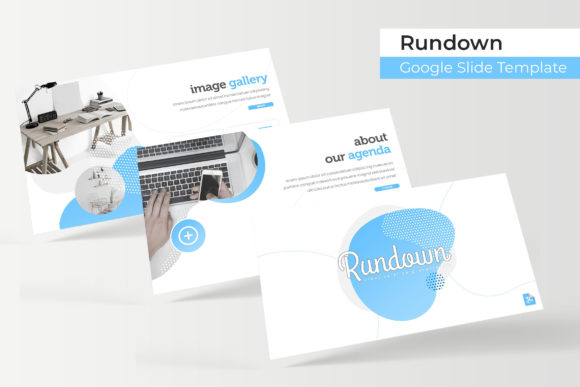
Rundown Google Slide Template
Every presentation starts with a blank canvas, but what you put on that canvas determines whether your audience leans in or tunes out. If you have ever spent hours wrestling with alignment, color consistency, or slide transitions, you understand that a solid template does more than save time—it shapes how your message is received. That is exactly where the Rundown Google Slide Template steps in. With 150 total slides spread across five premade color variations, each offering 30 slides, this template gives you a structured yet flexible foundation for just about any professional or creative project.
Rather than forcing you into a rigid design system, Rundown hands you a toolkit. You get handcrafted infographics, section break slides, dedicated portfolio and gallery slides, and pixel-perfect illustrations that actually scale without losing quality. Every element is built on master slides, meaning you can make global changes without editing each slide individually. That alone makes it a practical choice for anyone juggling multiple presentations or working under tight deadlines.
What Makes This Template Visually Distinct
The first thing you notice about the Rundown Google Slide Template is its clean, modern aesthetic. It leans toward a corporate-meets-creative style—structured enough for boardroom decks but flexible enough for pitch decks, social media content, or internal reports. The five color variations are not afterthoughts; they are premade palettes that feel intentional, not like someone just swapped a few hex codes. Whether you need muted tones for a financial presentation or bolder accents for a product launch, there is a colorway that fits without clashing with your brand.
The typography choices in the template work well because they prioritize readability. Headlines carry enough weight to establish hierarchy, while body text stays clean and scannable. That might sound basic, but it is surprising how many templates sacrifice legibility for looks. Here, the balance between display elements and supporting text is solid. You can drop in your own content and trust that the visual hierarchy will hold up, which matters more than most people realize.
Personality Without Overdoing It
Some templates try so hard to impress that they end up distracting from the actual content. Rundown avoids that trap. It has personality—the infographics are genuinely useful, the section break slides give your deck breathing room, and the gallery layouts let you showcase work without overcrowding. But it never screams for attention. The design supports your message rather than competing with it. That restraint is harder to achieve than it looks and is one reason this template works across industries.
Where This Template Delivers Real Value
The applications for the Rundown Google Slide Template are broader than you might expect. Here are a few scenarios where it shines:
- Client pitches and proposals: The portfolio slides give you a polished way to showcase case studies or past work. Combined with the infographic slides, you can present data in a way that feels persuasive, not overwhelming.
- Internal company decks: Consistency matters when you are reporting to stakeholders or aligning teams. The master slide setup means you can enforce brand guidelines without manual tweaks on every page.
- Social media and digital content: Because the template is built in Google Slides, you can easily export frames for Instagram, LinkedIn, or YouTube thumbnails. The drag-and-drop picture placeholders make swapping visuals painless.
- Educational and workshop materials: Section breaks and clearly structured layouts help learners follow along. Whether you are teaching a design principle or walking through a business framework, the template keeps things organized.
- Personal branding and portfolios: Freelancers and creatives can use the gallery slides to build a simple portfolio deck without needing a separate website. It is a practical way to send potential clients a visual summary of your work.
One thing worth noting is that all photographs used in the preview are for illustration only. The template itself is a framework—you supply your own imagery or source stock photos separately. That is actually a good thing because it means you are not locked into someone else's visual style.
How Design Consistency Affects Brand Perception
If you have ever sat through a presentation where fonts changed between slides or colors clashed halfway through, you know how quickly credibility erodes. Consistency is not just a nice-to-have; it signals professionalism and attention to detail. The Rundown Google Slide Template helps you maintain that consistency without micromanaging every element. Because the template uses master slides, a single update propagates across your entire deck. That might sound like a small convenience, but when you are working on a 50-slide deck at 11 PM, it makes the difference between delivering something polished and turning in a mess.
From a brand identity standpoint, having five color variations gives you flexibility without requiring a full redesign. If your brand uses a specific palette, you can adapt the variation that aligns closest and make minor tweaks. If you do not have established brand colors yet, the premade palettes give you a starting point that looks deliberate rather than random. That is helpful for startups, solopreneurs, or anyone still building their visual identity.
Readability and Visual Hierarchy in Practice
Good typography is invisible when it works and glaring when it fails. This template uses font pairings that create clear distinction between headings, subheadings, and body content. That hierarchy guides the viewer's eye naturally, which is especially important when you are presenting complex information. If you have ever watched an audience squint at a cluttered slide, you know that readability is not just about font size—it is about spacing, contrast, and structure. The template handles those details so you do not have to think about them mid-presentation.
The included font files come with a free download link, so you are not stuck using fallback fonts that break your layout. That is a detail that experienced designers will appreciate because font licensing can be a minefield. The template documentation also includes a Readme First file, which walks you through setup so you can hit the ground running.
Practical Guidance for Choosing and Using This Template
Before you commit to any template, it helps to think through a few factors. Here is a straightforward checklist to evaluate whether the Rundown Google Slide Template fits your project:
- Project fit: Consider the tone of your content. This template works best for professional, educational, or creative contexts where clarity matters. If you need something highly experimental or avant-garde, you might want a different approach.
- Font pairing and testing: The template uses specific fonts that complement its layout. Test them with your own content early. Swap in your brand fonts if needed, but pay attention to how the hierarchy holds up. Some fonts look great in headlines but fail in body text at smaller sizes.
- Color variation review: Open all five color files and see which one aligns with your brand or message. Do not force a colorway that does not fit just because it looks nice in isolation. Think about your audience and context.
- Readability check: Project your slides on a screen or print a few pages. Sometimes what looks crisp on a laptop screen becomes hard to read on a larger display. Adjust contrast or font sizes as needed.
- Commercial licensing: The template itself is ready for commercial use, but remember that the preview photos are not included. Source your own imagery responsibly, whether from stock sites, your own library, or client assets.
Real-World Observations from Using Templates Like This
I have worked with plenty of presentation templates over the years, and the ones that actually get used repeatedly share a few traits. They are flexible enough to accommodate different content types, they do not break when you make changes, and they look good without requiring hours of customization. The Rundown Google Slide Template checks those boxes. The infographic slides, in particular, are a standout because they are not just decorative—they actually help you explain data or processes in a way that text alone cannot.
One practical tip: when you use the section break slides, treat them as moments of transition. They signal to your audience that you are moving to a new topic, which improves comprehension and keeps attention from drifting. That is a small design choice with a big impact on engagement.
Final Thoughts on Making This Template Work for You
No template does the work for you, but the right one removes friction so you can focus on your message. The Rundown Google Slide Template offers a solid mix of structure and flexibility, with enough visual variety to keep your presentations from feeling repetitive. Whether you are a designer preparing a client deck, a marketer building a campaign presentation, or a small business owner pitching to investors, this template gives you a reliable foundation. Five color variations, 150 slides, handcrafted infographics, and pixel-perfect illustrations—it is a practical toolkit that respects your time and your content.