Iceberg Power Point Template: A Comprehensive Design System for Versatile Presentations
Creating a presentation that resonates with an audience requires more than just compelling content; it demands a visual narrative that supports and enhances the message. The Iceberg Power Point Template offers a substantial design system built around a coherent set of tools that streamline this process. With 150 total slides distributed across five distinct color variations, each containing 30 slides, this template provides a flexible foundation for a wide range of presentation needs. Instead of forcing a user to adapt their content to a rigid design, the template adapts to the content, offering multiple pathways for structuring information visually.
Understanding the Scale: 150 Slides Across Five Color Worlds
The sheer volume of slides in the Iceberg Power Point Template is one of its most immediately apparent characteristics. Rather than a single deck with a handful of layouts, this system provides 150 individual slides, organized into five separate template files. Each file represents a complete color variation, with 30 slides per template. This structure means a user can choose a color palette that aligns with their brand, topic, or audience without needing to manually recolor elements. The five premade colors are not arbitrary; they are selected to cover a spectrum of common corporate, creative, and educational contexts. For instance, a deep blue variant might suit financial reporting, while a warmer earth-tone set could work well for sustainability or nonprofit presentations. This color variation system effectively gives the user five distinct presentation identities in one purchase.
Why 30 Slides Per Template Matters
Thirty slides per color variant is not a random number. It is a carefully calibrated quantity that allows a presenter to cover a comprehensive narrative without feeling constrained. A typical presentation might include a title slide, an agenda, several content slides for each major point, a section break, a data visualization slide, a gallery or portfolio page, and a closing slide. With 30 slides, there is room for redundancy and variation; a user can select the most appropriate layout for each piece of content rather than forcing content into a limited set of options. This abundance also supports longer presentations, such as those used in academic conferences, product launches, or strategic planning sessions, where covering multiple angles is essential.
Handcrafted Infographics and Section Breaks
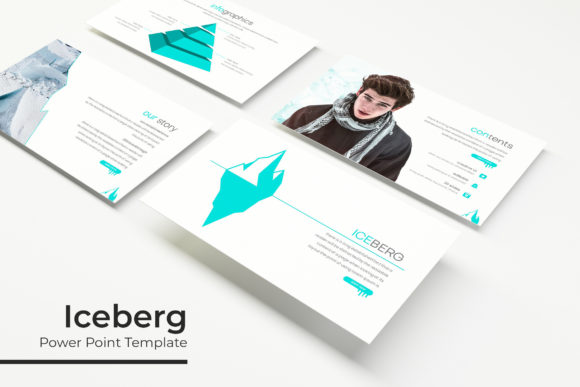
One of the standout features within the Iceberg Power Point Template is the inclusion of handcrafted infographics. These are not generic, auto-generated diagrams but custom-designed visuals that integrate seamlessly with the overall aesthetic of the template. Infographics are critical for translating complex data or processes into digestible visual stories. The handcrafted nature ensures that each element, from timelines to flowcharts, has a polished, intentional look that avoids the clunky, mismatched appearance often seen when combining disparate graphic elements.
Section break slides serve a different but equally important purpose. In longer presentations, the audience can lose track of the overarching structure. A well-designed section break acts as a visual pause, signaling a shift in topic or a new phase of the discussion. The Iceberg Power Point Template includes dedicated section break slides that maintain the design language while providing a clear thematic divider. This is especially useful in educational settings where a lecture might move from theory to application, or in business settings where a proposal transitions from background information to the proposed solution.
Gallery and Portfolio Slides for Visual Showcasing
For professionals in creative fields, real estate, product design, or photography, a presentation often needs to showcase visual work. The inclusion of gallery and portfolio slides addresses this need directly. These slides are designed to display images in an organized, aesthetically pleasing layout without overwhelming the viewer. They allow for multiple images per slide, with options for captions or brief descriptions. This feature is particularly valuable for architects presenting project portfolios, photographers showing a series of works, or marketing teams displaying campaign visuals. The drag-and-drop picture placeholders simplify the process of swapping out preview images, so the user can quickly populate the slides with their own content without needing to adjust layout or alignment manually.
Resizable, Editable Graphics and Master Slide Efficiency
A common frustration with presentation templates is the lack of flexibility. Graphics that cannot be resized, colors that cannot be changed, or elements that break when edited can derail a workflow. The Iceberg Power Point Template emphasizes resizable and editable graphics. Every vector illustration and icon in the template is built to scale without losing quality. This is crucial when adapting a slide for different screen sizes, printing, or projecting on large displays. The use of pixel-perfect illustrations ensures that even at high zoom levels, the edges remain crisp and professional.
The template is built on master slides, which is a foundational feature in PowerPoint that many users underutilize. By basing the design on master slides, any global change—such as updating a font, adjusting a background color, or repositioning a logo—can be applied across all slides in seconds. This saves an enormous amount of time during the editing phase. For business owners who need to produce multiple presentations for different clients or departments, mastering this feature can reduce design time from hours to minutes. The Readme file included with the template provides guidance on how to use the master slide functionality effectively, which is a practical touch for users who may not be PowerPoint power users.
What’s Included: Files, Fonts, and Practical Considerations
Understanding exactly what comes with the Iceberg Power Point Template helps set realistic expectations for the user. The package includes five PPTX files, each corresponding to one of the five premade color variations. Additionally, there are five PPTX widescreen versions, ensuring compatibility with modern display standards. The widescreen format is now the default for most presentations, so having both standard and widescreen options gives the user flexibility depending on their output device.
Font licensing is a common oversight in many templates. Here, a free font download link is included, along with the name of the font used. This allows the user to install the exact typeface that matches the template design, maintaining the intended visual harmony. The note about photographs and pictures in the preview being used for illustration purposes only is an important clarification. The template provides placeholders; the user must supply their own images. This is standard practice but worth highlighting so that someone unfamiliar with template purchasing understands they are buying a structural and design framework, not stock photography.
Practical Applications Across Different User Profiles
The broad audience for the Iceberg Power Point Template means it must serve various use cases without compromising on quality. For a researcher presenting at a conference, the handcrafted infographics and clean slide layouts allow complex graphs and data to be presented clearly. The section breaks help organize a lecture into distinct chapters, making it easier for the audience to follow the argument. For a business owner pitching to investors, the professional color variations and gallery slides can showcase product mockups or team credentials, while the master slide structure ensures that branding elements remain consistent throughout the pitch.
For an educator designing a semester-long course, the 150-slide library across five color themes means they can create a different visual identity for each module. This helps students differentiate between topics and reduces cognitive load. For a hobbyist or creator building a personal portfolio, the pixel-perfect illustrations and drag-and-drop picture placeholders lower the technical barrier, allowing them to focus on content curation rather than design execution. The template essentially serves as a collaborative partner, taking care of the visual heavy lifting while the user concentrates on message and narrative.
Workflow Benefits and Time Savings
Time is a precious resource for professionals and creators alike. The Iceberg Power Point Template streamlines the presentation creation process in several concrete ways. First, the existence of 30 pre-designed slides per color means that a user rarely needs to start from a blank slide. They can browse through the layouts and select the one that best matches the content type—whether it is a bullet point list, a quote, a comparison, a timeline, or a full-bleed image. Second, the drag-and-drop picture placeholder eliminates the need to manually resize and crop images. Simply drag an image into the designated area, and the template adjusts it to fit the intended frame. Third, the use of master slides means that any formatting change—such as adjusting the font size across all headings—is applied globally, preventing the tedious process of updating each slide individually.
For teams working collaboratively on a presentation, these features become even more valuable. Different team members can work on different sections, knowing that the design constraints will keep the output uniform. The result is a cohesive presentation that looks like it was designed by a single professional, even if multiple contributors were involved. This is especially relevant for agencies or departments that produce frequent client-facing presentations.
Observations on Design Quality and Versatility
Looking at the overall design approach of the Iceberg Power Point Template, it is clear that attention has been paid to both aesthetic appeal and functional utility. The handcrafted nature of the infographics suggests a level of detail that mass-produced templates often lack. The pixel-perfect illustrations indicate that vector assets have been carefully adjusted to ensure sharp rendering across devices. The five color variations are not merely different hues; they represent distinct moods that can influence how the audience perceives the content. A cool, blue-toned template might convey professionalism and trust, while a vibrant, orange-toned version could signal creativity and energy.
The inclusion of both standard and widescreen PPTX files is another thoughtful touch. While widescreen is now the norm, there are still situations where a 4:3 ratio is required, such as in older conference rooms or when projecting onto certain screens. Having both formats ready means the user does not have to manually adjust aspect ratios, which can often distort layouts and require significant rework. The template essentially future-proofs the presentation against different display environments.
Considerations for Potential Users
While the Iceberg Power Point Template offers a comprehensive toolkit, it is worth noting that the preview images are not included. This means the user must supply their own photographs or graphics. For someone who does not have access to a library of high-quality images, this could be an additional step in the workflow. However, the template’s structure is designed to make image integration straightforward, so this is less of a barrier than it might be with less well-designed templates. Additionally, the free font download link is only useful if the user actually installs the font; otherwise, PowerPoint will substitute a default font, which can alter the intended look. The Readme file addresses this, but it requires the user to follow the instructions.
For a user who is new to PowerPoint’s master slide functionality, there may be a slight learning curve. However, the time invested in understanding this feature pays off quickly, especially for anyone who creates presentations regularly. The template is not a magic wand; it is a powerful tool that requires some basic familiarity with the software to unlock its full potential. That said, the inclusion of a Readme file with setup instructions mitigates this challenge.
Final Thoughts on the Iceberg Power Point Template
The Iceberg Power Point Template stands out not because of a single revolutionary feature, but because of the thoughtful integration of multiple features that address real-world presentation challenges. The 150 total slides across five color themes give the user a vast library of layouts. The handcrafted infographics, section breaks, and gallery slides cover a wide range of content types. The resizable graphics, picture placeholders, and master slide architecture reduce friction in the editing process. And the inclusion of clear documentation and font links ensures that even users with moderate PowerPoint skills can achieve professional results. Whether for a business pitch, an academic lecture, a creative portfolio, or a team collaboration, this template provides the structural scaffolding needed to build a compelling visual narrative. It respects the presenter's time while elevating the audience's experience.