Delusion Power Point Template: A Versatile Presentation Solution for Modern Professionals
Presentation templates have become a staple for anyone who needs to communicate ideas visually, whether in corporate boardrooms, academic settings, or creative pitches. Among the many options available, the Delusion Power Point Template stands out for its sheer volume and built-in flexibility. With 150 total slides spread across five premade color variations, this template offers a level of depth that many alternatives simply do not match. But volume alone is not enough to make a smart choice. Understanding how Delusion Power Point Template works in practice, where it excels, and where it may fall short is essential for anyone evaluating presentation tools.
The template is designed around a modular structure. Instead of offering a single deck with minor tweaks, Delusion Power Point Template provides five distinct color variations, each containing 30 slides. That means you effectively get five presentation sets in one package. This approach appeals to professionals who work across multiple projects, brands, or contexts and need a consistent visual language that can shift in tone or palette without starting from scratch. The premade colors are not just surface-level palette swaps; they are integrated throughout the slide layouts, infographics, section breaks, and portfolio pages, creating a cohesive look within each variation.
What Makes Delusion Power Point Template Distinct
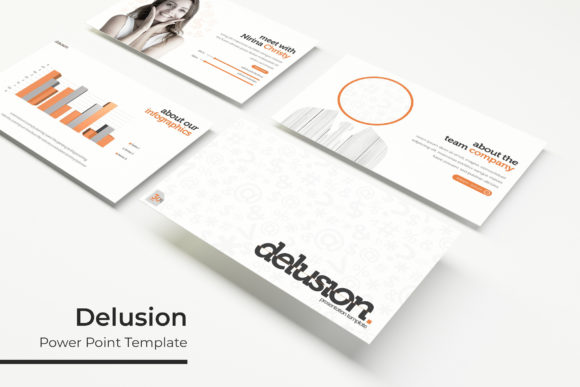
The core distinction of Delusion Power Point Template lies in its balance between structure and customization. Many templates force you into rigid layouts that are difficult to adapt without breaking the design. Delusion Power Point Template, by contrast, is built on master slides with resizable and editable graphics. This technical foundation means you can adjust elements without distorting proportions or destroying the underlying layout. The pixel-perfect illustrations and handcrafted infographics further reinforce a polished, professional output that does not require advanced design skills to maintain.
Another notable feature is the inclusion of picture placeholders with drag-and-drop functionality. Instead of manually resizing and cropping every image, you simply drag a photo into the placeholder, and the template adjusts automatically. This saves considerable time, especially for users who need to produce multiple presentations under tight deadlines. The section break slides and gallery/portfolio slides add versatility for longer decks, making it easier to organize content into digestible segments without losing visual flow.
For those who value flexibility in output format, the package includes five PPTX files in widescreen ratio, each aligned with one of the five color variations. A Readme file and a link to download the free fonts used are also included, which eliminates the common frustration of missing fonts when opening a template on a different machine. However, it is important to note that the photographs and pictures shown in the preview are not included. The template provides the structure and placeholders, but you need to supply your own imagery. This is a standard practice, but it is worth remembering when budgeting time and resources for your final presentation.
How Delusion Power Point Template Compares with Similar Options
When comparing Delusion Power Point Template with other presentation solutions, the most obvious difference is the slide count and color variety. Many templates offer 20 to 50 slides in one or two color options. Delusion gives you 150 slides across five palettes, which is significantly more content out of the box. For someone who frequently presents to different audiences or needs to maintain brand consistency across departments, this breadth can be a practical advantage. Instead of buying multiple templates, you get one system that covers a range of tones and contexts.
However, more slides does not automatically mean better quality. Some alternative templates focus on deeper customization per slide, with more elaborate animations or unique layout experiments. Delusion Power Point Template is more grounded in functional, clean design. Its handcrafted infographics and gallery slides are distinctive, but they follow a consistent, professional aesthetic rather than pushing creative boundaries. If your goal is to create a presentation that feels experimental or highly artistic, you might find Delusion's style too conventional. On the other hand, if you need reliable, polished visuals that communicate clearly, this template is well-suited.
Another comparison point is the editing experience. Because Delusion Power Point Template is built on master slides and uses resizable graphics, it is more forgiving for users who are not design experts. Many competing templates use complex grouping or embedded images that are hard to modify without distortion. The pixel-perfect illustrations here are vector-based or carefully constructed, so scaling them up or down does not degrade quality. This makes the template a good fit for teams where multiple people with varying skill levels need to edit the same deck.
Strengths and Tradeoffs of the Delusion Template
One of the clearest strengths of Delusion Power Point Template is its efficiency. The drag-and-drop image placeholders, master slide setup, and prebuilt infographics reduce the time from blank page to finished presentation. For a marketing manager preparing a quarterly review or a consultant building a client pitch, these time savings are tangible. The five color variations also allow you to adapt the same content for different contexts, such as a formal board presentation versus a more creative internal workshop, without redesigning slides from zero.
The handcrafted infographics deserve special mention. Infographics are often the most time-consuming part of a presentation to build from scratch. Having a set of prebuilt, editable infographics that fit the template's design language means you can present data in a visually engaging way with minimal effort. The section break slides also help with pacing, especially in longer presentations where transitions between topics can feel abrupt without a visual cue.
That said, there are tradeoffs. The most significant limitation is that the template does not include photographs. The preview images are for illustration only, so you must source your own photos. If you lack a library of high-quality images, this can add expense or effort. Additionally, while the five color variations are useful, they are fixed palettes. If your brand uses a specific color that does not match any of the five, you will need to manually adjust colors throughout all 30 slides in that variation. The template is editable, but recoloring a full deck consistently takes time and attention.
Another consideration is that the template is designed specifically for PowerPoint. While PPTX files are widely compatible, users who need to work in Google Slides, Keynote, or other presentation software may face conversion issues. Some animations, fonts, or layout details may not transfer perfectly. If your workflow relies heavily on a non-PowerPoint platform, Delusion Power Point Template may require additional tweaking after conversion, or you may want to look for a template native to that environment.
Best-Fit Situations: When Delusion Works Well
Delusion Power Point Template is a strong choice when you need to produce a substantial number of presentations across different contexts. For example, a communications team that supports multiple executives, each with a distinct style, can use the five color variations to give each leader a slightly different look while maintaining a consistent underlying structure. Similarly, an educator teaching multiple courses can assign a different color palette to each course, making it easier for students to associate materials visually.
It is also well-suited for project pitches and portfolio presentations. The gallery and portfolio slides are specifically designed to showcase work, whether that means product images, case studies, or creative samples. The drag-and-drop image placeholders make it fast to swap in new visuals without rebuilding the layout. For freelancers or agencies that present portfolios frequently, this template can serve as a reliable framework that requires only image and text updates between uses.
Another ideal use case is internal reporting. Many organizations require regular status updates, quarterly reviews, or data summaries. The handcrafted infographics in Delusion Power Point Template allow you to turn raw numbers into clear visuals quickly. The section break slides help segment different parts of the report, such as financials, operational metrics, and strategic goals, making the presentation easier for audiences to follow.
When Another Option Might Be a Better Fit
Despite its versatility, Delusion Power Point Template is not the best fit for every situation. If your presentation requires heavy animation, interactive elements, or video integration, you may find the template's static design limits your approach. While it works well for slide-based storytelling, it is not designed for multimedia-rich experiences. For product demos, training modules, or live presentations that rely on dynamic transitions, a more specialized tool or template may be necessary.
Another scenario where you might look elsewhere is if you need a highly minimal or ultra-clean aesthetic. Delusion Power Point Template has a distinct visual style with its handcrafted infographics and section breaks. If your brand or project demands a bare-bones, text-heavy look with minimal graphics, the template's design elements could feel busy or distracting. In that case, a simpler template with fewer built-in graphics would give you more control over the final appearance.
Budget is also a factor. While the template offers a lot of content for its price, you still need to invest in your own imagery. If you do not already have access to a photo library or the budget to license images, the overall cost of creating a polished presentation can add up. Some all-in-one solutions include stock photos or illustrations in their pricing, which might be more economical depending on your needs.
Decision Factors to Consider
When evaluating whether Delusion Power Point Template is right for you, start by considering how many distinct presentations you typically produce in a given period. If you find yourself creating multiple decks with different tonal or visual requirements, the five color variations offer a clear advantage over single-palette templates. Also consider the skill level of everyone who will edit the files. Teams with mixed design experience will benefit from the master slide structure and drag-and-drop placeholders that reduce the risk of layout mistakes.
Think about your content mix as well. If your presentations regularly include data visualizations, infographics, and portfolio-style content, the template's built-in assets will save you significant time. If your work is mostly text-based or conversational, the infographics and gallery slides may go underused. In that case, you might be paying for features you do not fully leverage.
Finally, consider your software environment. Delusion Power Point Template is a native PowerPoint product. If you and your collaborators work exclusively in PowerPoint, you are in an optimal position. If you need to share files across platforms or convert to other formats, test a sample slide before committing to ensure compatibility with your workflow.
Practical Examples of Using Delusion Power Point Template
Imagine a marketing coordinator at a mid-sized company who oversees presentations for three different product lines. With Delusion Power Point Template, she can assign one color variation to each product line, keeping visual identity consistent within each line while differentiating them from one another. She can reuse the same infographic layouts for sales data across all three lines, only swapping the color palette and updating numbers. This approach saves her hours of redesign work and ensures that each presentation looks professional from the start.
Consider a freelance graphic designer who pitches clients with a portfolio deck. He uses the gallery and portfolio slides to arrange his best work in a clean, structured format. Because the image placeholders are drag-and-drop, he can quickly update his portfolio after each new project without manually resizing every photo. The section break slides help him organize his work into categories like branding, web design, and print, so potential clients can easily navigate his capabilities.
In an academic context, a PhD candidate preparing for a dissertation defense might use Delusion Power Point Template to structure a lengthy presentation across multiple chapters. The section break slides mark each major section of the defense, and the infographics help present research data clearly. The five color variations allow the candidate to choose a palette that aligns with the university's branding or simply creates a calm, professional atmosphere for the defense committee.
Ultimately, Delusion Power Point Template is a robust tool that offers substantial value for professionals who need to produce consistent, high-quality presentations at scale. Its five color variations, handcrafted infographics, and user-friendly editing features make it a practical choice for a wide range of use cases. By understanding its strengths and limitations, you can decide whether it aligns with your specific needs, workflow, and content style. For many, the combination of volume, flexibility, and polish makes Delusion a compelling option worth considering alongside other presentation resources.